 Image 1 of 4
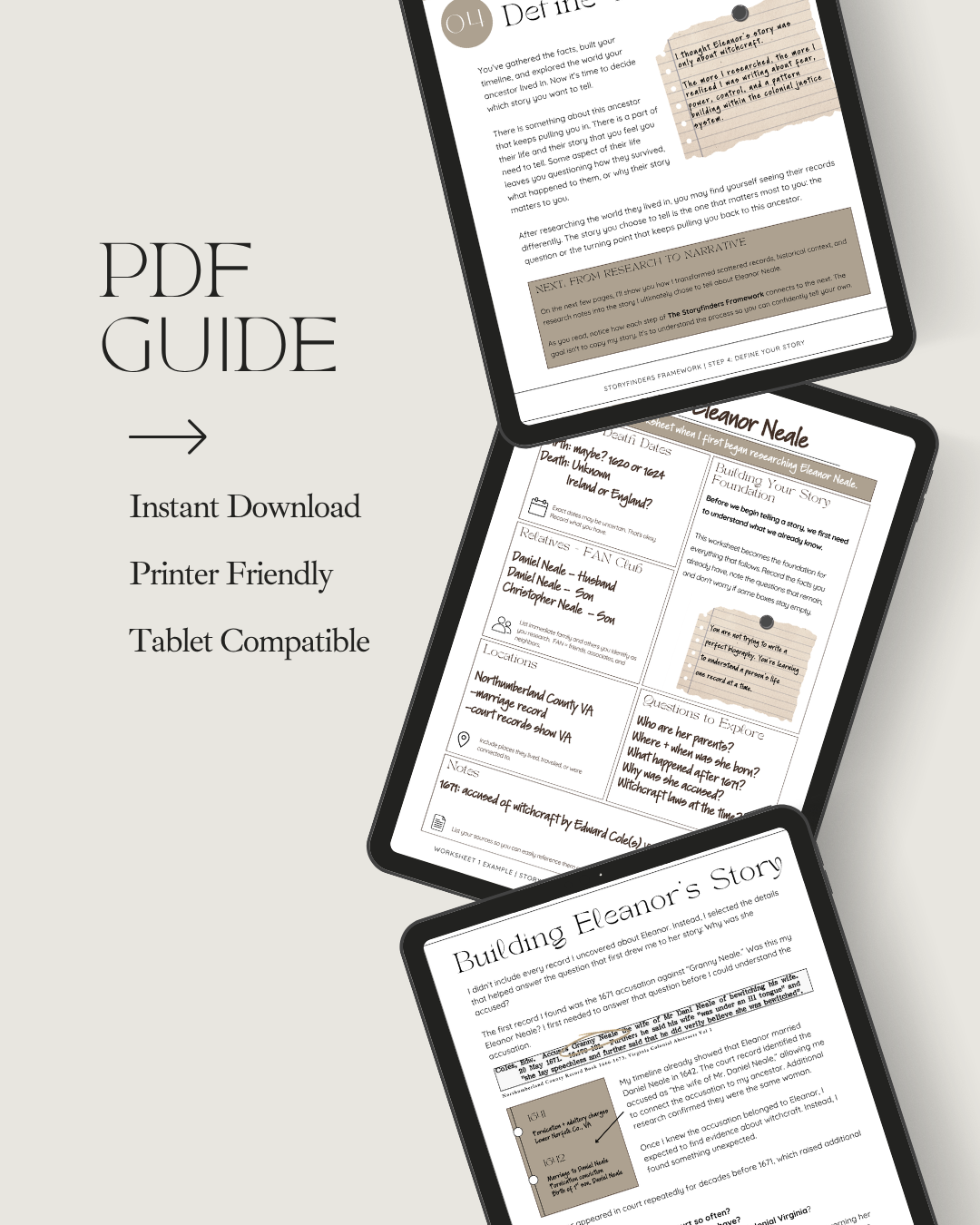 Image 2 of 4
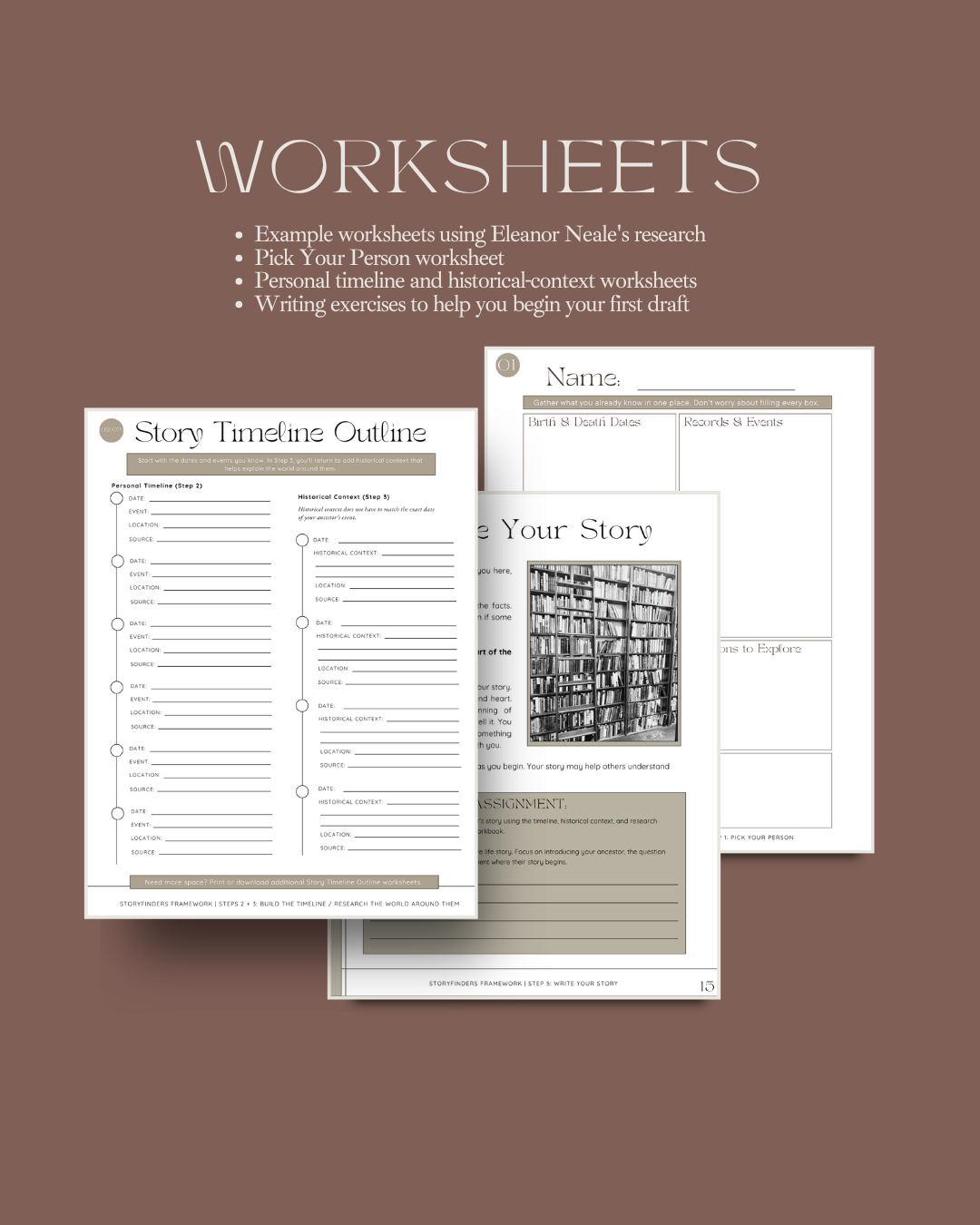 Image 3 of 4
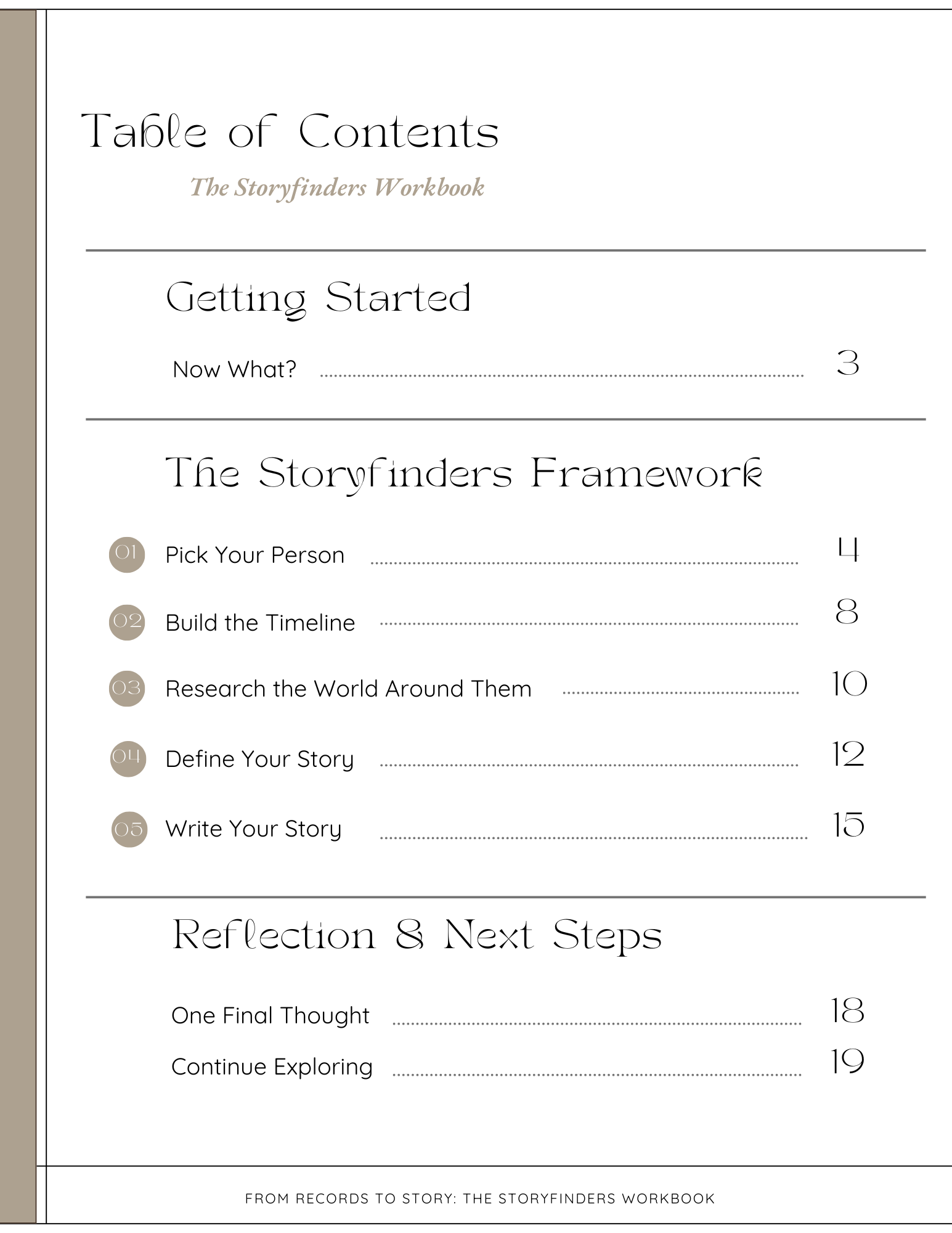 Image 4 of 4
Turn your genealogy research into a meaningful family story.
You have the names. You have the dates. Maybe you even have boxes of records and years of research.
But how do you move from a collection of facts to a story that helps you understand the person behind them?
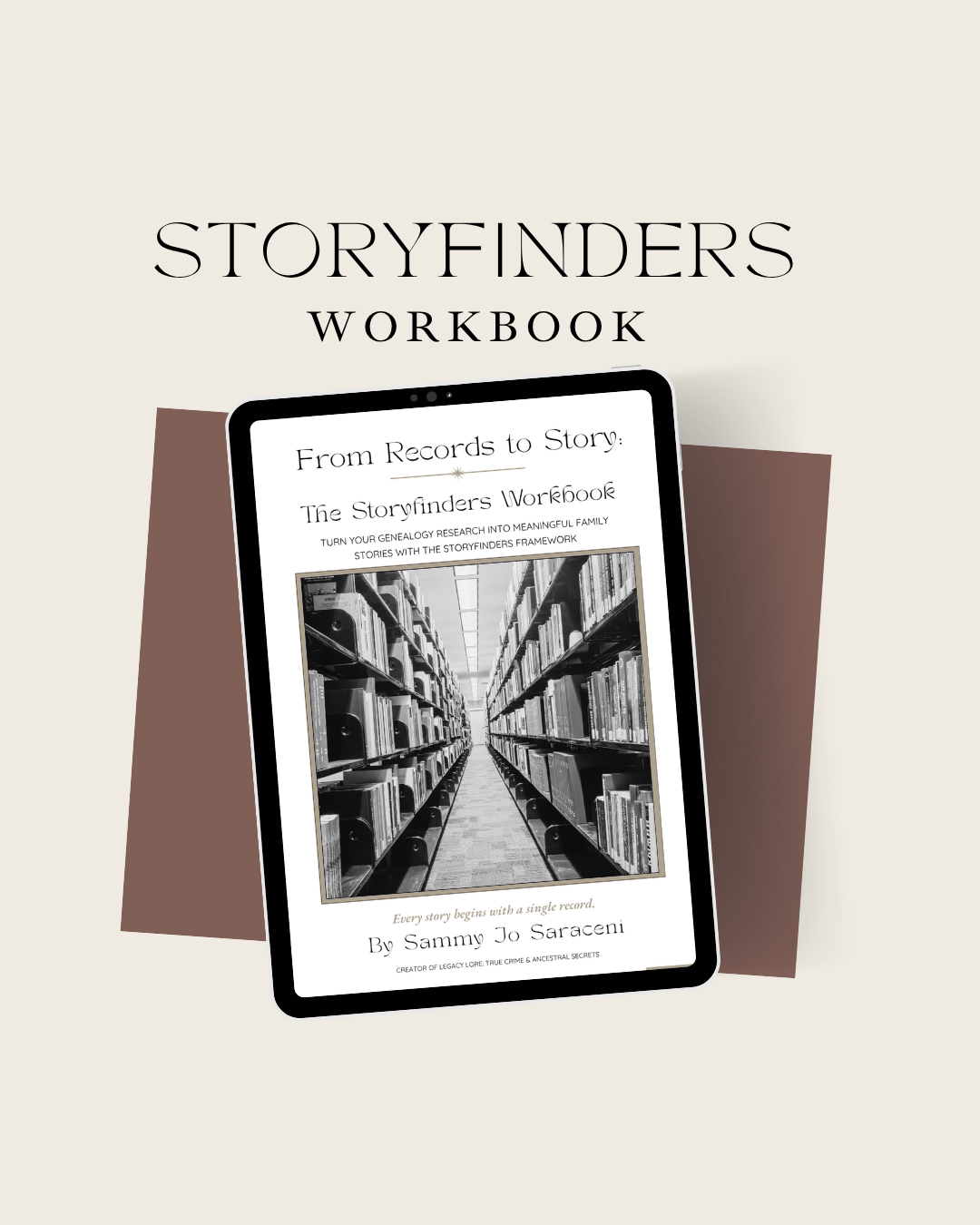
From Records to Story: The Storyfinders Workbook introduces you to the Storyfinders Framework, a five-step process designed to help you move from scattered records to a meaningful family narrative.
Inside, you'll learn how to:
Pick Your Person: choose an ancestor whose story you want to understand.
Build the Timeline: organize the records and events you already know.
Research the World Around Them: explore the historical context that gives those records meaning.
Define Your Story: identify the questions, experiences, and discoveries that shape the story you want to tell.
Write Your Story: begin turning your research into a narrative about the person behind the records.
Throughout the workbook, you'll follow the research process through the story of Eleanor Neale, an ancestor whose records led to questions about reputation, community, law, and an accusation of witchcraft in colonial Virginia.
You'll see how records became questions, how questions led to historical research, and how connecting the two changed the story.
Then you'll use the same process with your own ancestor.
A guided introduction to the Storyfinders Framework
Example worksheets using Eleanor Neale's research
A Pick Your Person worksheet
Personal timeline and historical-context worksheets
A historical research toolkit
Guided questions to help you define your story
Writing exercises to help you begin your first draft
Additional space to continue developing your story
You don't need a complete family tree or a finished research project to begin.
Start with one person. Start with what you know. Follow the questions that emerge.
Records tell us what happened. Context helps us understand why. And the stories we tell ensure our ancestors are remembered.
Turn your genealogy research into a meaningful family story.
You have the names. You have the dates. Maybe you even have boxes of records and years of research.
But how do you move from a collection of facts to a story that helps you understand the person behind them?
From Records to Story: The Storyfinders Workbook introduces you to the Storyfinders Framework, a five-step process designed to help you move from scattered records to a meaningful family narrative.
Inside, you'll learn how to:
Pick Your Person: choose an ancestor whose story you want to understand.
Build the Timeline: organize the records and events you already know.
Research the World Around Them: explore the historical context that gives those records meaning.
Define Your Story: identify the questions, experiences, and discoveries that shape the story you want to tell.
Write Your Story: begin turning your research into a narrative about the person behind the records.
Throughout the workbook, you'll follow the research process through the story of Eleanor Neale, an ancestor whose records led to questions about reputation, community, law, and an accusation of witchcraft in colonial Virginia.
You'll see how records became questions, how questions led to historical research, and how connecting the two changed the story.
Then you'll use the same process with your own ancestor.
A guided introduction to the Storyfinders Framework
Example worksheets using Eleanor Neale's research
A Pick Your Person worksheet
Personal timeline and historical-context worksheets
A historical research toolkit
Guided questions to help you define your story
Writing exercises to help you begin your first draft
Additional space to continue developing your story
You don't need a complete family tree or a finished research project to begin.
Start with one person. Start with what you know. Follow the questions that emerge.
Records tell us what happened. Context helps us understand why. And the stories we tell ensure our ancestors are remembered.